



Lead magnet: what it is, types and how to create one

04
June
2021
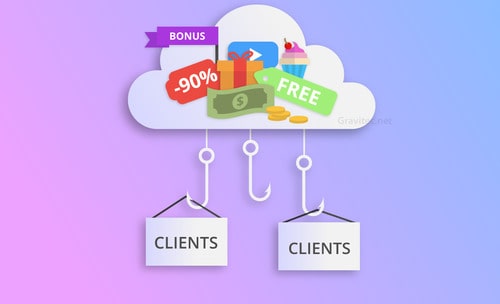
A lead magnet is a free, useful resource people get in exchange for their contact details: a checklist, template, calculator, mini-course, trial audit or discount. It solves one specific customer problem and leads towards your main product.
In short
- A good lead magnet solves one narrow problem and delivers a result in 5–15 minutes.
- It connects to your product: the natural next step after it is your service.
- You need three parts: a landing page, delivery (email or a Telegram bot) and a follow-up sequence.
- Collecting contacts requires consent to personal data processing.
- Track cost per contact and the share of contacts that turn into sales.
What is a lead magnet in simple terms?
A lead is a potential customer who has left their contact details. A lead magnet is the reason to leave them. At this stage the person is still researching and will gladly trade an email address or a Telegram handle for something that helps right now.
Here is how it works:
- Someone sees the offer in an ad, an article or on social media.
- They visit the lead magnet page and leave their contact.
- They get the material immediately: by email, in a Telegram bot or on screen.
- Over the next days they receive a few useful emails or messages and an offer for your main product.
What types of lead magnets are there?
| Type | Example | Fits |
|---|---|---|
| Checklist | “25 checks before launching ads on your site” | Services, B2B |
| Template or spreadsheet | A content plan template, a sample contract, a calculation sheet | Marketing, consulting, accounting |
| Calculator | Renovation cost, equipment payback | Construction, manufacturing |
| Guide or mini-course | A 5-email series “How to choose…” | Education, complex products |
| Quiz | 5 questions and a matched solution | Furniture, windows, travel, real estate |
| Trial service | A free quick audit, diagnosis or first consultation | Agencies, clinics, garages |
| Discount or bonus | 10% off the first order for signing up | Online stores |
How do you create a lead magnet that brings customers?
- Find a common question. What do customers ask before buying? The answer to that question is your lead magnet topic.
- Narrow it down. “Checklist: preparing a sole trader for a tax audit” beats “Everything about taxes”.
- Deliver a quick win. The person should get value within 5–15 minutes.
- Tie it to the product. A checklist shows how much work lies ahead and ends by offering to do it for the client.
- Make it look right. A branded PDF, a Google Sheets template or a web calculator. Presentation signals the level of your company.
For B2B services, a trial service often works best: a quick audit or a case review. The client sees your expertise and meets the person they will work with.
Where do you place a lead magnet and how do you deliver it?
- Landing page. A benefit-led headline, what is inside, who it is for and a 1–2 field form. We build such a landing page within 3 working days after the brief is agreed and materials are received.
- Pop-up or a block inside blog posts. Informational traffic turns into contacts.
- Telegram bot. Delivers the material, asks qualifying questions and hands warm contacts to a manager. More: chatbot development.
- Email platform. Sends the material and a 3–5 email follow-up sequence.
- CRM. The contact lands in HubSpot, Pipedrive or a similar CRM tagged with the lead magnet, so you can see whether it reached a deal. Routine hand-offs can be automated: sales automation.
The form needs consent to personal data processing and a link to your privacy policy. Newsletter consent goes in a separate checkbox.
What are the most common mistakes?
- The topic is too broad: nobody finishes a 60-page “Marketing guide”.
- The material is promised but arrives a day later or lands in spam. Delivery should be instant, from a verified sending domain.
- Silence after delivery. Without a follow-up sequence the contact goes cold within days.
- The form asks for phone, email, job title and city. Every unnecessary field loses part of the audience.
How do you measure a lead magnet’s performance?
- Page conversion rate: the share of visitors who left a contact.
- Cost per contact: ad spend divided by the number of contacts.
- Opens and replies in the email sequence or bot messages.
- Sales rate: how many contacts reached a deal within 30–90 days.
The last metric matters most. Cheap contacts without sales mean the lead magnet attracts the wrong people. Send a generate_lead event to GA4 and reconcile it with deals in your CRM.
FAQ
How is a lead magnet different from a regular discount?
A discount suits people already ready to buy. A lead magnet reaches them earlier, while they are researching, and useful material positions you as the expert.
Which lead magnet works best for services?
Most often a trial service (quick audit, diagnosis, consultation), a checklist or a cost calculator.
How many fields should the form have?
One or two: email or phone/Telegram, plus a name. Every extra field lowers conversion.
Do you need a separate website for a lead magnet?
A dedicated page on your site or a landing page is enough. It makes running ads and tracking conversion easier.
How often should a lead magnet be updated?
Whenever facts, prices or regulations in the topic change, or when page conversion drops. Review it at least every six months.
Want contacts that turn into deals? Marketing MIX will help pick the topic, build the landing page and set up delivery and your CRM. More on landing page development.
Contact us
We will answer all your questions.
 DUNS Number: 68-606-2061
 NCAGE Number: A3G3J






 "INNOVA CONSULTING GROUP"


Comments
Write comment