



How to Create a Website: Three Ways and How to Choose

09
June
2020
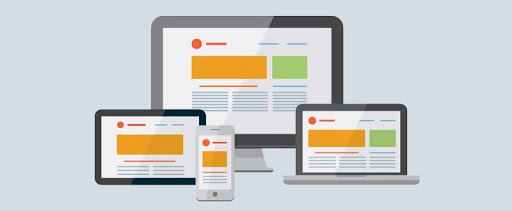
There are three ways to create a website: build it on a platform like Wix or Tilda, set up WordPress with a freelancer, or hire an agency. Businesses that need enquiries from Google usually choose an agency, which is responsible for structure, SEO and launch.
Key points
- A website builder suits a simple business card site or an idea test, but limits SEO and portability.
- A CMS (WordPress, MODX) is flexible, but needs updates, security and a specialist.
- An agency handles structure, design, the SEO foundation, analytics and launch.
- Our timelines: a landing page within 3, a website within 10, an online store within 15 working days after the brief is agreed and materials are received.
- Before you start, prepare the site's goal, a list of services, texts or key points, photos and domain access.
What are the ways to create a website?
| Website builder (Wix, Tilda, Shopify) | CMS with a freelancer (WordPress) | Agency, turnkey | |
|---|---|---|---|
| Suits | Card site, idea test, simple store | Blog, service site, WooCommerce store | Company website, store, a project built for search leads |
| Who is responsible | You | One contractor | A team under contract |
| SEO and speed | Limited by the platform's templates | Depend on the contractor's experience | Built into the structure from day one |
| Portability and growth | Tied to the platform and its subscription | Can be moved and extended | Can be moved and extended; code and access are yours |
| Support | Platform updates the system; content is on you | While the contractor is available | Under a support agreement |
Way 1. A website builder
Wix, Tilda, Webflow and Shopify bundle templates and hosting into one subscription. You can put together a first page in an evening, and their AI assistants will even draft the copy. The limits show up later: URL structure, structured data and speed are hard to control, the design looks like thousands of other sites, and moving to another platform means rebuilding. For a freelancer's business card site or a demand test, that is enough. A company planning to grow through Google often has to replace a builder site within a year.
Way 2. A CMS and a freelancer
WordPress is the most widely used CMS in the world, with thousands of themes and plugins, plus WooCommerce for stores. MODX gives more freedom in layout and structure. A CMS site can be moved to any host and extended. The risks come from the contractor: outdated plugins open security holes, a site without backups can be lost after a hack, and when a freelancer disappears, access and knowledge of the code go with them. If you choose this route, put access handover, backups and updates in the contract.
Way 3. Hire a web agency
An agency runs the project as a team: analyst, designer, developer, SEO specialist and project manager. We build on WordPress, WooCommerce, Shopify and MODX, and use Next.js/React and Laravel for complex projects. You get a site that is ready for promotion from launch: clean URLs, meta tags, schema.org, Core Web Vitals performance, GA4 and Search Console, and forms that deliver enquiries. The domain, hosting and all access are registered to you.
In our experience, a landing page goes live within 3 working days, a business card site or corporate website within 10 working days, and an online store within 15 working days after the brief is agreed and materials are received. Larger projects with integrations are estimated after the brief.
The stages of creating a website
- Goal and audience. Which enquiries you need and from whom.
- Structure and prototype. Pages for services and search queries, a block layout.
- Design. Home and key pages in Figma, plus the mobile version.
- Development. Front end, CMS, forms, integrations with CRM, payments or delivery.
- Content and SEO foundation. Copy, meta tags, structured data, sitemap.
- Launch. Domain, hosting, SSL, GA4, Search Console, form testing.
- Support and promotion. Updates, backups, SEO and advertising.
What to prepare before you start
- The site's goal and a list of services or products.
- Websites you like and your competitors.
- Copy or key points, photos, logo, documents.
- Domain access, if you already have one.
- A person who can approve each stage quickly.
We also build corporate websites for companies that need a full catalogue of services and several language versions.
Portfolio projects
- Fast Coffee — website for a chain of self-service coffee shops
- MBSoy — website for a Finnish architecture studio
- Dental Clinic — dental clinic website with custom design and online booking
FAQ
How long does it take to create a website?
At our agency, a landing page takes up to 3 working days, a business card or corporate website up to 10, and an online store up to 15 working days after the brief is agreed and materials are received. Projects with integrations are estimated after the brief.
Can I create a website with AI?
AI builders put together a draft page quickly. A business needs more: verified copy, a structure built around search queries, analytics and forms that deliver enquiries. AI speeds up a specialist's work, and a person still checks the result.
Which is better: a website builder or WordPress?
A builder suits a simple business card site or a demand test. WordPress and other CMS platforms are chosen when the site will grow, be promoted in Google and may need to move between hosts.
What affects the cost of a website?
The number of unique pages, the design, features (catalogue, payments, customer account), CRM and delivery integrations, language versions and the amount of copy. We give an exact estimate after the brief.
What does a website launch need besides development?
A domain, hosting, an SSL certificate, GA4 and Search Console connected, working enquiry delivery and a promotion plan: SEO, ads and a Google Business Profile.
Need a website that brings enquiries? Describe your task, and we will propose a format, a timeline and a work plan.
Contact us
We will answer all your questions.
 DUNS Number: 68-606-2061
 NCAGE Number: A3G3J






 "INNOVA CONSULTING GROUP"


Comments
Write comment