


Why You Need to Define Your Target Audience and How to Do It

02
June
2020
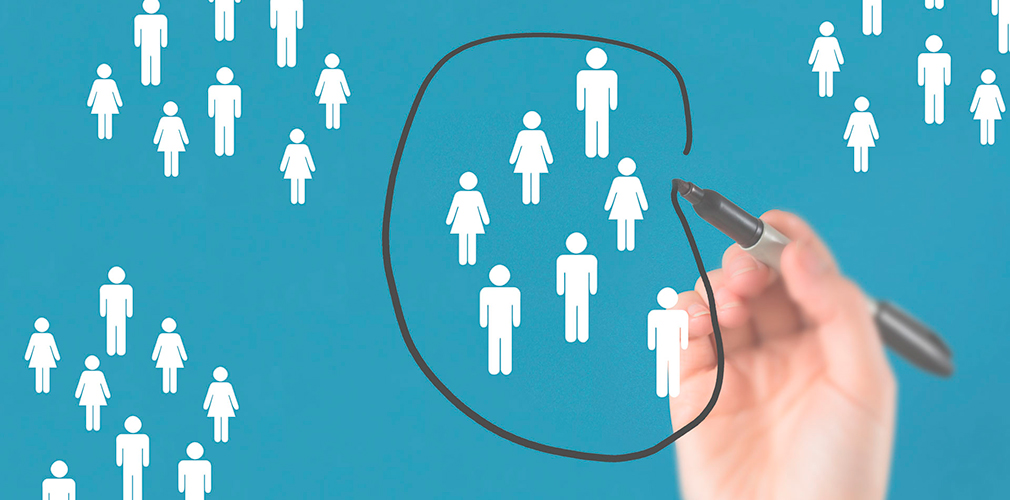
A target audience is the people or companies whose problem your product solves and who will pay for it. Define it from CRM and GA4 data, interviews and the 5W method, then test it with small ad campaigns.
Key points
- Without a defined audience, ads reach everyone and the budget goes to random people.
- Data sources: CRM, GA4, Search Console, sales calls, reviews of competitors.
- The 5W method: what, who, why, when and where they buy — five questions per segment.
- A buyer persona describes the task, objections and selection criteria; age is secondary.
- Test hypotheses with small Google Ads and Meta Ads campaigns and compare cost per lead.
What is a target audience in simple terms?
It is a group of people who have a problem your product solves, the money to solve it and a reason to buy now. For a coffee shop, that is residents and office workers within a few blocks. For a packaging manufacturer, it is procurement managers at food producers. A business usually has several segments, and each needs its own message and channel.
Why define your target audience?
- Advertising. Google Ads and Meta Ads are set up by queries, interests and behaviour. Without a clear audience, budget goes to people who will not buy.
- Copy and website. Headlines, arguments and examples depend on who is reading: an owner, an accountant or an engineer.
- Product and pricing. Knowing the customer's tasks tells you which packages and terms to offer.
- Channels. TikTok users and procurement managers on LinkedIn spend their time in different places.
How to define your target audience, step by step
- Export customer data. From the CRM, take those who have already bought: industry, city, order size, source, repeat purchases.
- Check analytics. In GA4, look at location, devices, demographics and the pages people view before sending an enquiry. In Search Console, look at the queries that bring visitors.
- Talk to customers. Five to ten short interviews: why they chose you, what they compared, what almost stopped them.
- Ask your sales team. They know common questions and objections better than any spreadsheet.
- Study competitors. Their reviews on Google and marketplaces show what customers are missing.
- Split into segments and describe each one with the 5W method.
Sherrington's 5W method for segmentation
| Question | What we describe | Example for a dental clinic website |
|---|---|---|
| What? | Which product or service is bought | Implants, treatment, hygiene |
| Who? | Who buys and who decides | Adults aged 30–60, parents for children |
| Why? | Motive and task | Pain, aesthetics, prevention |
| When? | When the need appears | Acute pain, routine check-up |
| Where? | Where they search and buy | Google, maps, reviews, recommendations |
A five-row table quickly shows which pages the website needs and which channels to advertise in. For an in-depth look at the market, competitors and demand, see our market and consumer analysis service.
How to build a buyer persona
A persona describes a typical member of a segment. A useful persona answers the questions that shape your copy and ads:
- what task the person is solving and why now;
- which options they compare;
- what holds them back: price, risk, lack of trust, timing;
- what proof they need: case studies, reviews, documents;
- where they look for information.
Age and gender help with ad targeting, while the buying decision is explained by the task and the objections.
Common mistakes when defining a target audience
- "Our audience is everyone." No advertising platform can be set up from that description.
- Demographics only. "Women aged 25–45" says nothing about the task or the reason to buy.
- Guesswork. A persona built without CRM data and interviews repeats the owner's assumptions about customers.
- One message for every segment. An owner and an accountant need different arguments, even for the same product.
How to test your audience hypotheses
Describe two or three segments and run a small Google Ads or Meta Ads campaign for each, with its own landing page. Setup takes a few working days after we receive access. Compare cost per lead and the share of leads that turned into sales in the CRM. The segment with the better economics gets the main budget. Our Google Ads and paid social teams run segment-based campaigns.
FAQ
What is a target audience in simple terms?
It is the people or companies whose problem your product solves and who are willing to pay for it. They are the ones your ads should reach and your website copy should speak to.
What is the difference between a target audience and a segment?
The target audience is all potential buyers of the product. A segment is part of that audience with a shared task and motive. Each segment gets its own message and channel.
What types of target audience are there?
The primary audience buys and brings most of the revenue. The secondary audience influences the decision: parents, a manager, a consultant. In B2B, the buyer, the user and the budget approver are described separately.
How do I define the audience for a new product with no customers?
Write hypotheses with the 5W method, study Google queries and competitor reviews, interview potential buyers and test the segments with small ad campaigns.
How often should I review my target audience?
Once a year or after noticeable changes: a new product, a price increase, a new region, falling ad conversion rates. CRM data shows shifts before sales do.
Want to know exactly who to sell to and where? Tell us about your product, and we will propose an audience and market analysis plan.
Contact us
We will answer all your questions.
 DUNS Number: 68-606-2061
 NCAGE Number: A3G3J






 "INNOVA CONSULTING GROUP"


Comments
Write comment